Saturday, March 1, 2025

The Oval Office


Yesterday was supposed to be a historic day. Ukraine and the United States were to agree a deal to exchange support for Ukraine's defence against Russian invasion for rare earth minerals that the US needs. Instead, Trump and JD Vance attacked President Zelenskyy for not agreeing to a peace deal. Zelenskyy made the point that Ukraine needs peacekeeping support because Putin has reneged on agreements before. They in turn attacked him for making his case in the presence of media. It was a shocking and unprecedented spectacle in the White House. It was a bullying session, and Trump thought it would make for great television. How stupid. All he cares about is ratings not peace. 

So, who was in the room? Secretary of State Marco Rubio was in the back bench along with Treasury Secretary Scott Bessent. The Ukrainian Ambassador to the US Oksana Makarova and the Ukrainian delegation were present. The press included some mainstream media as well as right-wing reporters and reportedly a delegation from Tass, the Russian state media agency. 

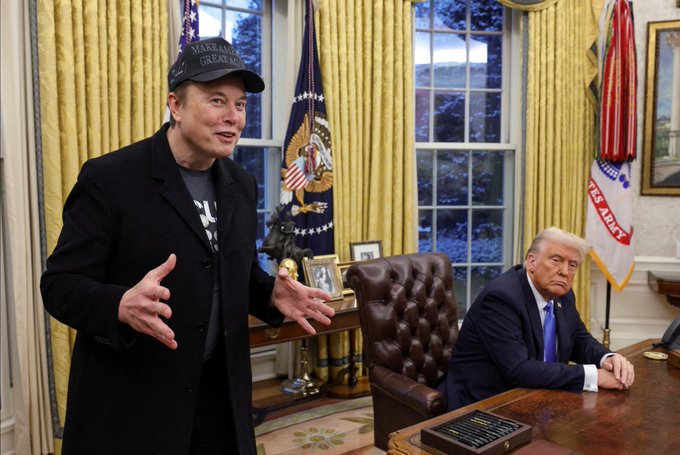
A right-wing reporter asked Zelenskyy why he didn't wear a suit to the White House. Zelenskyy gave a flippant answer which was the first misstep. Of course, no one asked other foreign nationals why they didn't wear a suit to the White House and didn't consider it disrespectful when Churchill wore fatigues during WWII. And no one questioned Elon Musk when he wore a T-shirt and a MAGA hat to a press conference in the Oval Office. It was disrespectful to President Zelenskyy and intended to insult him. 

What a horrible experience. My hope is that all of Europe will now rally around Ukraine in solidarity against oppression on any front. 


 https://edition.cnn.com/2025/03/01/politics/inside-trump-zelensky-meeting/index.html

https://www.independent.ie/world-news/north-america/fury-boils-over-in-white-house-the-world-reacts-to-trump-and-zelenksy-showdown/a1580742592.html

Sunday, February 16, 2025

How does DeepSeek describe the differences between Russians and Ukrainians?


The differences between Ukrainians and Russians encompass linguistic, cultural, historical, and political dimensions. Below is a detailed synthesis of these distinctions based on the provided sources:

---

### **1. Linguistic Differences**  

#### **Alphabet and Writing**  

- **Ukrainian**: Uses a modified Cyrillic alphabet with unique letters such as **Ґ** (g), **Є** (ye), **І** (i), and **Ї** (yi), which do not exist in Russian. It also omits Russian letters like **Ё**, **Ы**, and **Ъ** (hard sign), replacing the latter with an apostrophe .  

- **Russian**: Includes letters like **Ё** (yo), **Ы** (a deep "i" sound), and **Ъ**, which are absent in Ukrainian. The pronunciation of shared letters also differs (e.g., **Г** is a hard /g/ in Russian but a soft /h/ in Ukrainian) .  


#### **Vocabulary**  

- Approximately **38–62% of vocabulary differs** between the two languages. For example:  

  - **Bread**: *хліб* (Ukrainian) vs. *хлеб* (Russian) .  

  - **Sunday**: *неділя* (Ukrainian) vs. *воскресенье* (Russian), while *неділя* means "week" in Russian .  

  - **False Friends**: Words like *час* mean "time" in Ukrainian but "hour" in Russian .  


#### **Grammar**  

- **Cases**: Ukrainian has **7 grammatical cases** (including the vocative case for direct address), while Russian has 6 .  

- **Verb Tenses**: Ukrainian uses **three future tenses** (perfective, imperfective synthetic, and analytical), whereas Russian has two .  

- **Pronunciation**: Ukrainian is more phonetic (pronounced as written), with consistent vowel sounds (e.g., "o" remains /o/ even when unstressed, unlike Russian, which reduces it to /a/) .  


---


### **2. Cultural and Historical Context**  

#### **Historical Divergence**  

- Both languages stem from **Old East Slavic** (Kievan Rus'), but diverged after the 13th century. Ukrainian absorbed influences from Polish, Hungarian, and Slovak due to geopolitical shifts, while Russian evolved under centralized Moscow rule and borrowed from French and German .  

- **Soviet Era**: Russian was enforced in Ukraine, suppressing Ukrainian in education and media. Post-1991 independence, Ukraine revived its language as a symbol of national identity .  


#### **Traditions and Identity**  

- **Ukrainian Culture**: Emphasizes folk traditions like *vyshyvanka* (embroidered shirts) and Easter rituals. Literary figures like Taras Shevchenko symbolize resistance and pride .  

- **Russian Culture**: Celebrates events like *Maslenitsa* (spring festival) and boasts literary giants like Tolstoy and Dostoevsky. Russian identity often ties to a centralized state and Orthodox Christianity .  


---


### **3. Mutual Intelligibility**  

- **Asymmetry**: Most Ukrainians understand Russian due to historical exposure, but Russians often struggle with Ukrainian. Vocabulary and pronunciation differences hinder full comprehension .  

- **Regional Variations**: Western Ukrainians primarily speak Ukrainian, while eastern regions lean toward Russian. A mixed dialect, *Surzhyk*, blends both languages .  


---


### **4. Political Significance**  

- **Language Laws**: Ukraine promotes Ukrainian in education, media, and government to strengthen sovereignty, especially after Russia’s 2014 annexation of Crimea .  

- **Prepositions as Symbols**: Using *в* (in) instead of *на* (on) for Ukraine in Russian signifies recognition of its statehood, reflecting political alignment .  


---


### **5. Modern Dynamics**  

- **Language Revival**: Ukrainian usage has surged since 1991, though Russian remains prevalent in urban and eastern areas .  

- **Geopolitical Tensions**: Language debates mirror Ukraine’s push for European integration versus Russia’s influence campaigns .  


---


### **Summary Table**  

| Aspect                | Ukrainian                                  | Russian                                    |  

|-----------------------|--------------------------------------------|--------------------------------------------|  

| **Alphabet**          | Ґ, Є, І, Ї; no Ы, Ё, or ъ                | Ы, Ё, ъ; no Ґ, Є, or Ї                    |  

| **Pronunciation**     | Softer, consistent vowels (e.g., "o" as /o/) | Harsher consonants, vowel reduction (e.g., "o" as /a/) |  

| **Grammar**           | 7 cases, vocative case, 3 future tenses   | 6 cases, 2 future tenses                   |  

| **Vocabulary**        | 38–62% unique words, Polish influences    | French/German loanwords, Soviet-era terms  |  

| **Cultural Identity** | Symbol of independence, folk traditions   | Centralized state, literary prominence     |  


For further exploration, refer to sources like the Duolingo Blog , Ukrainian Lessons , and Rhythm Languages .

I asked ChatGPT how Ukrainians are different from Russians....


Ostrich egg I just purchased from Ukraine

This is ChatGPT's response...I'm going to also ask DeepSeek ai to see how they compare. 

Share

You said:
How are Ukrainians different from Russians?
ChatGPT said:

Ukrainians and Russians have distinct identities, despite their shared history and some cultural similarities. Here are some key differences:

1. Language

  • Ukrainian is the official language of Ukraine, a Slavic language with significant influences from Polish and other European languages.
  • Russian is the official language of Russia and has a different phonetic system, vocabulary, and grammar.
  • Many Ukrainians are bilingual, but there has been a strong push for the use of Ukrainian since independence in 1991.

2. History & Identity

  • Ukraine has a unique history, with deep roots in Kyivan Rus' (a medieval state from which modern Ukraine, Russia, and Belarus trace their origins).
  • Ukraine was often under foreign rule (Poland, Lithuania, Austro-Hungary, and the Russian Empire), which shaped its independent identity.
  • The 20th century saw events like the Holodomor (a Soviet-induced famine in 1932–33 that killed millions of Ukrainians), which deepened the divide.
  • Since 1991, Ukraine has developed a stronger sense of national identity, separate from Russia.

3. Culture & Traditions

  • Ukrainian culture is more influenced by Central and Eastern Europe, while Russian culture has been shaped more by Orthodox and imperial traditions.
  • Ukrainian folk traditions, music, and embroidery (vyshyvanka) are distinct.
  • The Cossack legacy is central to Ukrainian identity, representing independence and resistance.

4. Political Outlook

  • Ukraine leans more towards democracy and European integration (e.g., the 2014 Revolution of Dignity), while Russia has maintained a centralized, authoritarian government.
  • Many Ukrainians aspire to join the EU and NATO, while Russia opposes this.

5. Religion

  • Both Ukrainians and Russians are traditionally Orthodox Christians, but Ukraine has multiple churches, including the Orthodox Church of Ukraine (OCU), which gained independence from the Russian Orthodox Church in 2019.
  • Religion in Ukraine is less tied to the state than in Russia, where the Russian Orthodox Church often supports the government.

6. Mentality & Values

  • Ukrainians generally value decentralization, local governance, and personal freedoms, shaped by their historical struggle for independence.
  • Russian political culture leans toward strong centralized rule and state power.

7. Attitude Toward Russia

  • Due to the ongoing war (since 2014, escalated in 2022), many Ukrainians reject Russian influence and seek to distance themselves culturally, politically, and linguistically.

In summary, while Ukrainians and Russians share some historical ties, they have distinct languages, histories, cultures, and political paths. Ukraine has developed a strong national identity that is increasingly separate from Russia, especially since the war.

Sunday, January 19, 2025

Motanka


One of the Ukrainian women I helped come into Ireland, Julia, gave me a Motanka doll from Ukraine to protect our home. I was not familiar with the Motanka tradition. Perhaps it's from a different region than my family comes from. 

Anyway, I was very happy to find this post on a site delightfully called Ukieology in Canada about Motanka. Each doll is unique and made with good intentions and sincerity as it was believed that it has power and will act as a protector of a household and its inhabitants.

Motankas differ from ordinary dolls by "empty" faces. The ancients believed that giving the doll a face could tie a person's soul to it. Therefore, faces have no facial features, only multicoloured threads laid out in a cross shape across the face. 

My doll doesn't have the pattern shown on the dolls in Canada. But the cross pattern, which they explained is a pagan symbol of the sun where horizontal lines represent feminine and vertical represent masculine, is very reminiscent of St Brigid's Cross in Ireland, yet another potential connection between Ukraine and Ireland. 


On the 1st February, Imbolc, I plan to make dandelion fritters. Brigit was a Herbalist and this was her speciality. I will embrace my Motanka and introduce her to Brigid. 

Dandelion Flower Fritters

A pint jar filled with fresh dandelion flowers, stems detached, yellow blossoms fully opened

80 g cream flour

80 ml milk

5 ml baking powder

1 egg

Pinch of sea salt

Oil or Butter for frying

Optional items to add for sweet fritters: spoonful of honey and 5 ml of any of the following: cinnamon, cloves, cardamom or nutmeg. For savory fritters add fresh herbs like thyme, rosemary and oregano plus more salt, pepper and a pinch of chili for extra heat.

Dandelion flowers will close within about 20-30 minutes after being picked so it is important to make the fritters immediately upon harvesting.

Mix dry ingredients then slowly add the milk and beat in the egg. Add the sweet or savory ingredients, as desired. Dip the flower blossoms into the batter, coating well. Fry until golden brown. Best if eaten immediately.

Sunday, September 22, 2024

Careers approved for Ukrainians to pursue

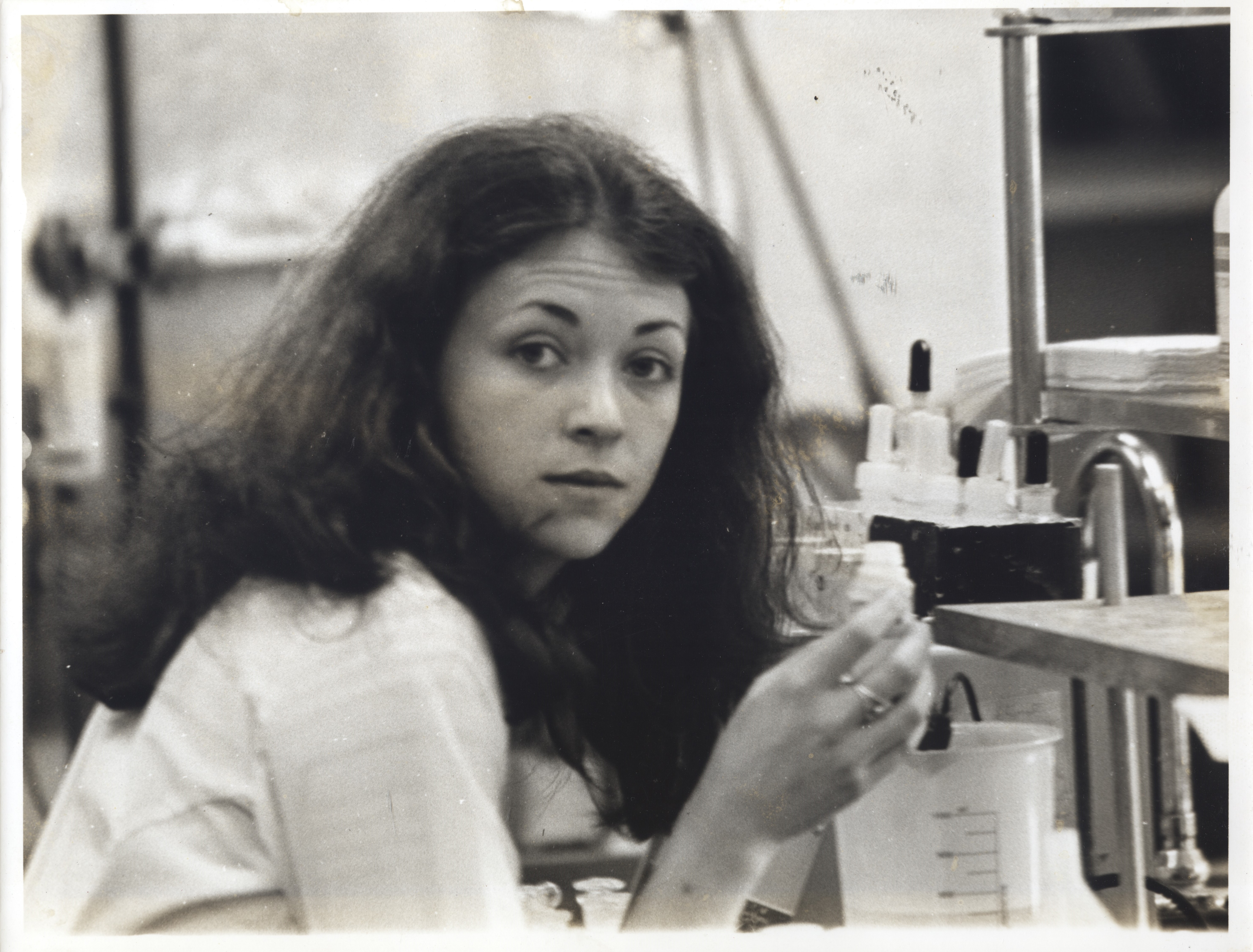
Me in the lab at Rockefeller University circa 1975

When I was growing up, I was expected to become a doctor, a lawyer or an engineer. Those were the only 'respectable' professions among the Ukrainian diaspora of the time. My brother became an electrical engineer working in the budding computer industry, my sister became a doctor and well-respected infectious disease consultant. Both earned their degrees on full scholarships, my brother on sports (soccer) and my sister on academics. None of us would have been able to afford university otherwise.

I didn't care for the idea of being a boring lawyer. I had no idea what engineering was. I saw how hard my sister worked to get her medical credentials -- no way was I going to do that. 

My father used to always tell me that because I was born in America, I could become President one day. I suppose that would have been a fourth option. But it seemed like a stretch for the daughter of immigrants to reach for the Presidency of the United States of America in a society where women were meant to stay at home and have babies. 

I loved science and I craved to be near, on, or in the ocean. I loved looking at the stars and sky. At first, I thought I'd become an astronaut. I suppose every kid thought that in the 1960s. But I actually went after it only to learn I was too short and wouldn't be able to reach the controls in the capsules. LOL. 

So next, I read Rachel Carson and I thought I could become a marine biologist and save the oceans. I was desperate to learn how to speak dolphin. I applied to Woods Hole Oceanographic Institute but was turned down. Then I applied to the University of Miami and NYU, Miami because it had an excellent Marine Biology program and NYU because it had an oceanography exchange program with Woods Hole. I received full scholarships to both but I chose NYU. The semester I got to NYU, they cancelled the exchange program and I was stuck with no marine science. I majored in biology and chemistry, had several minors including anthropology, and completed my BA degree in three years instead of four. I wanted to get on with life.

I got a laboratory job at the very highly acclaimed Rockfeller University and hated it. Then I talked my way into a lab at Roche Labs. I hated that too. Had nightmares about killing rats, which I sacrificed by the hundreds in the name of human advancement. 

I transitioned into marketing and to make a long story short, ended up as President of several communications companies. My mom always introduced me as 'my daughter the President' even though she never had a clue what I did. So I guess my father was right. In America, his daughter could become President one day. 

As President of Dugan/Farley Communications
which later became Bozell Global Healthcare 

As President of the HBA

A winner of the HBA STAR award 


Saturday, September 21, 2024

A visit by cousins


Growing up in Philadelphia, the cousins were all quite close. I was much younger than most of the crowd, having been the result of a celebration by my parents after arriving in the New World, a mistake as my mother explained. Two cousins in Toronto, the only ones from my mother's side of the family, were my age, one older and one younger than me. My sister was closest in age otherwise and she was nine years older. My brother was almost 11 years older. So it was like growing up with two sets of parents. 

But then, cousins who had gone to Australia first decided to join the rest of the family in America. Bo was my brother's age but Mishka was only 6 years older and that made a difference when I was 6 years old. She was still a kid but the others were already grown up. Miska became my favourite cousin. 

Fast forward, and we are now in our 70s. Mishka married a South American doctor and went to live in Venezuela. Sadly I never visited her there. They escaped when the regime became autocratic and moved to Florida. I hadn't seen Mishka in more than 20 years when we got an invitation to her daughter Natalia's wedding. It was great fun to see them again, the girls Ara, Lesia, and Talia, and, of course, Mishka. It was like no time had passed. 

So when they planned a trip to the UK, they included a two-night fly-by to County Mayo to see us. That's not nearly enough time, and they literally 'did' the UK first, arriving exhausted. But it was great to show them our little corner of the world. Reconnected at last. 


Tuesday, April 2, 2024

Easter in Ireland with Ukrainians


On Easter Sunday we hosted a traditional Ukrainian Easter lunch for the 8 Ukrainian families we helped the most, a few Irish friends and German friends in residence. About 40 people in total. 

We had an Easter egg hunt for the kids, ate ourselves silly, walked up to the top of the land for the views over Clew Bay, and then we had dessert. I made my first ever studenetz and it was delicious, and over the span of the week, I systematically produced a menu that included Ukrainian vegetable salad, potato salad, tsvikla, horseradish sauce, lamb, and ham as well as a walnut mocha torte. Alex made paska, pashtet, baked four loaves of bread and rolls. Our friends brought cakes, a duck, casseroles, and other goodies. We were afraid we wouldn't have enough food in traditional Ukrainian fashion!  Everyone went home with doggie bags. 

They are my new family. I have adopted all these amazing Ukrainians. There was joy in the world today and it displaced the sorrow felt every other day. I was too busy to take any decent photos.

What a journey this has been for me in Ireland with the Ukrainians. Easter Sunday, they were marvelling at Alex's paska, the traditional Easter bread. They had heard about the traditional one being sweet and plain but decorated with symbols. 

In modern Ukraine, they have moved away from the traditional ways and adopted new ways of decorating their paska with icing and coloured sprinkles. They also branched away from sweet and some do savoury, and variously flavoured. The Christians still bless it in their Easter baskets on Easter Saturday.

Most had never seen a real pysanka. They were astounded that I had real eggs painted in intricate detail in my basket. 

The Crimean tatars were celebrating the beginning of Ramadan but they joined in the camaraderie. It was lovely having them with us. 

It's fascinating to everyone that my Ukrainian, being more than 70 years out of Ukraine when my parents fled, is more authentic than theirs. They say I have an American accent in Ukrainian, but I use all the old Ukrainian words not the Russian ones that infiltrated the language. They love reading my Ukrainian history books because they are learning all the history that was suppressed under soviet rule. The wonder of it all. 

I never could have imagined this journey.